Reviews for:
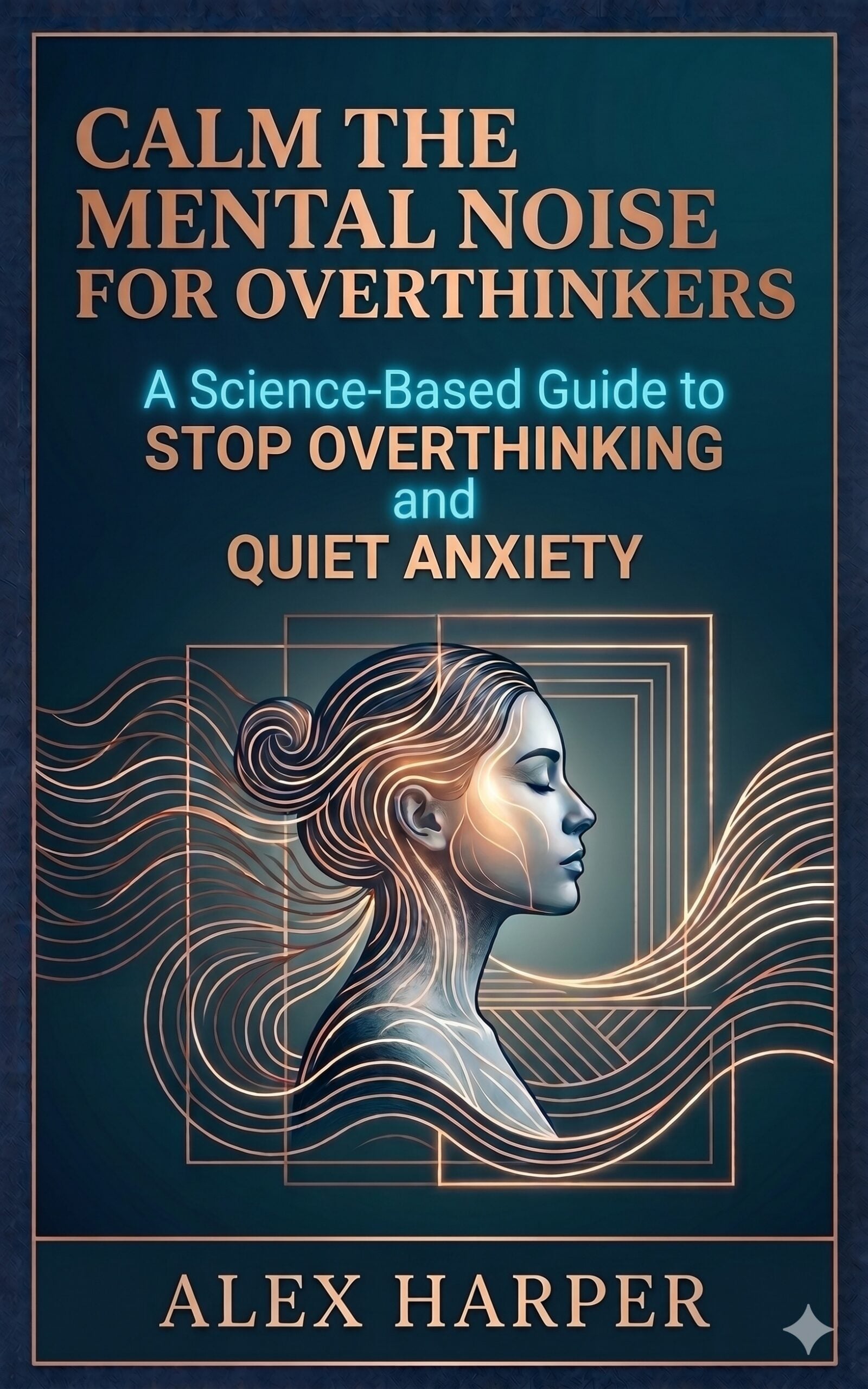
Calm the Mental Noise for Overthinkers

Author: Alex Harper
Publication date: Feb, 24 2026
Reviews: 1
92% RV Score
Calm the Mental Noise for Overthinkers: A Science-Based Guide to Stop Overthinking and Quiet Anxiety

Do you find your mind replaying conversations…
predicting worst-case scenarios…
or refusing to quiet down at night?

You’re not broken.

Your brain is doing exactly what it evolved to do: protect you.

But when that protective system becomes overactive, it creates mental noise — constant analysis, rumination, and anxiety that drains your focus and peace of mind.

Designed to be read in under two hours, Calm the Mental Noise gives you fast, practical, science-based techniques to interrupt racing thoughts and retrain your mind for steadiness—without the fluff.

Inside this actionable short-read guide, you’ll discover:

• Why your brain gets stuck in overthinking loops
• The 90-Second Reset to calm anxiety quickly
• A powerful technique to distance yourself from intrusive thoughts
• The Worry Window method used by therapists to reduce rumination
• Simple grounding exercises to stop spiraling in minutes
• A step-by-step Night Reset Protocol for quieting the mind before sleep
• How to build emotional resilience and tolerate uncertainty

This book isn’t about forcing positive thinking.

It’s about understanding how your mind works — and learning how to guide it back to calm in a single sitting.

If you’re ready to stop exhausting mental loops and develop a steadier mind, this guide will show you how.
Overall ReaderVerified Score
92%

Review 01

ReaderVerified Score
92%
Reviewer: David Melde 06/26/2026
Verified Purchase

Dave Melde
5 out of 5 stars. A clear, practical guide that actually quiets the mind
Reviewed in the United States on June 26, 2026
Format: Kindle
Verified Purchase
My readerverified score is 92%. Calm the Mental Noise for Overthinkers is one of the rare anxiety guides that delivers exactly what it promises: fast, science‑based tools that work in real life. The book is short by design, but it never feels shallow. Instead, the author uses the brevity to keep every idea focused, actionable, and easy to absorb.

What stood out most to me was how clearly the book explains why the brain gets stuck in loops — not in abstract psychology terms, but in a way that makes your own patterns suddenly make sense. The 90‑Second Reset, the Worry Window, and the grounding techniques are all simple enough to use immediately, yet surprisingly effective. I tried a few while reading and felt the shift.

I also appreciated the tone: calm, direct, and free of the usual “just think positive” advice. The author treats overthinking as a normal brain process that can be retrained, not a personal flaw. That framing alone is grounding.

If you’re someone whose mind keeps replaying conversations, spiraling at night, or jumping to worst‑case scenarios, this guide offers a practical path back to steadiness. It’s a quick read, but one I’ll return to often.

Highly recommended for anyone looking for real tools to quiet mental noise.